



“Is plastic inherently bad?” – We share our experience and insights with you and explain why, at Stapelstein®, we made a very conscious decision in favor of the mono-material EPP (expanded polypropylene) and what motivated us to start a cooperation with WasteReduction.
The problem with plastic
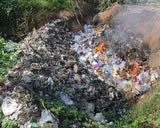
Plastic waste still enters the natural environment unhindered in many parts of the world and causes pollution with worrying long-term consequences. Especially in countries of the Global South, where there is often no functioning waste management, people are left alone with their mountains of trash.
Why plastic anyway?
In our search for the right material for the Stapelstein® elements, we conducted thorough research and tested various prototypes. From the very beginning, it was important to us how the elements could return to the material cycle after use. We chose EPP (expanded polypropylene):
- A single plastic: Stapelstein® elements are made of the mono-material EPP. It is foamed with steam and consists of around 96% air (by volume).
- Lightweight and load-bearing: One Original supports 180 kg, one Original Grow supports 300 kg, one Board supports 120 kg.
- Tested: EPP contains no phthalate plasticizers. The elements have been tested according to EN 71-3 for direct contact with skin and mouth.
- Back into the cycle: Because Stapelstein® EPP elements consist of a single plastic, the material is technically 100% recyclable – it can go straight back into production 1:1. We take back used elements free of charge: write to hi@stapelstein.de, and you will receive a free return shipping label.
- Made in Oederan: Every Stapelstein® EPP element is produced by WSVK Innovation GmbH in Oederan near Chemnitz. TÜV SÜD has certified the site’s energy management according to ISO 50001:2018 and its environmental management according to ISO 14001:2015. The site also operates its own photovoltaic system.
You can find more on the topic of #Monomaterial here.
Our commitment with WasteReduction
We use plastic, and we believe that companies that put plastic products into the world should be aware of their impact. In order to critically question ourselves, but also to draw the attention of consumers and producers to this issue, we have supported WasteReduction since 2023, a social impact organization committed to counteracting the plastic crisis.
“As long as we share one planet, we cannot be indifferent to how waste is handled in other countries”
WasteReduction Team
WasteReduction – A valuable approach to solutions
With their company philosophy, Ruth and Martin, the founders of WasteReduction, create a wonderful opportunity to advocate for a clean environment. WasteReduction also finances educational projects for a mindful approach to plastics.

How we support WasteReduction
For every kilogram of EPP that we sell with our Stapelstein® EPP elements, we support WasteReduction with a monetary contribution. WasteReduction uses the money in three areas:
This means that for every 10 kg, we contribute proportionally as follows:

Clean-ups to remove plastic waste from nature

Improving waste management and building recycling facilities in places where the most plastic waste flows unhindered into the environment

Workshops and environmental education at schools in Germany and Austria about the consequences of plastic waste
Clean-ups to remove plastic waste from nature
Improving waste management and building recycling facilities in places where the most plastic waste flows unhindered into the environment
Workshops and environmental education at schools in Germany and Austria about the consequences of plastic waste
The projects we support are implemented by WasteReduction’s partners in different countries:
You can find a video insight into WasteReduction’s work here.
We are all entangled in the growing plastic crisis. Together, we can reduce the mountains of waste by consciously questioning our purchasing decisions.